
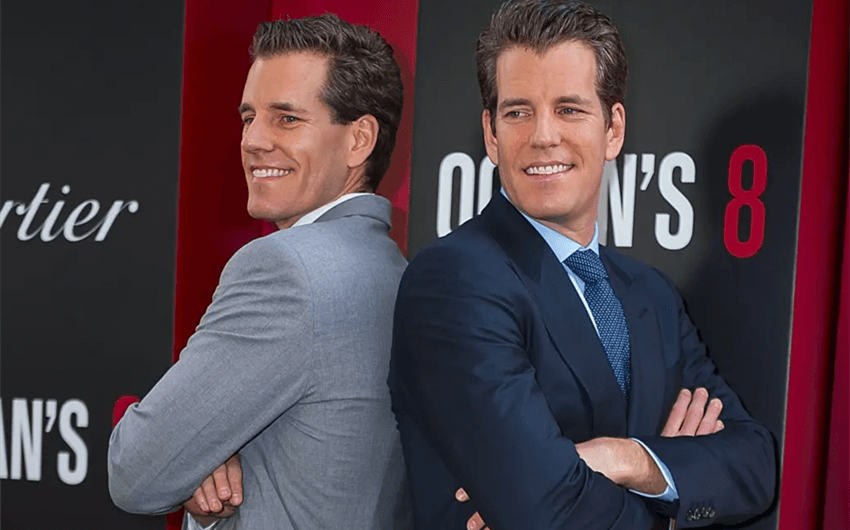
Tyler Winklevoss Net Worth: How Bitcoin, Gemini, and Investments Built Wealth Today

Tyler Winklevoss net worth is a question people ask because his wealth isn’t built like a traditional celebrity paycheck—it’s built like a modern finance story: early tech stakes, major litigation proceeds, aggressive Bitcoin conviction, and a crypto exchange that became a household name. The exact number isn’t publicly verified in a single official document, but the broad picture is clear: his fortune is commonly placed in the billionaire range, and the reasons why are easier to understand than the internet makes them seem.
Why Tyler Winklevoss’s Net Worth Is Hard to Nail Down
Before you even talk about numbers, it helps to understand why “net worth” is slippery for someone like Tyler Winklevoss:
- Crypto holdings fluctuate constantly. A person can “gain” or “lose” hundreds of millions on paper depending on market swings.
- Private company valuation isn’t a bank balance. A large portion of wealth can be tied up in equity that can’t be easily cashed out.
- Asset structure is complex. Wealth can include coins, stocks, venture investments, real estate, and business ownership.
- Twin finances get blended in headlines. People often combine Tyler and Cameron’s wealth into one story, which confuses the individual number.
So when you see a specific figure online, it’s best to treat it as an estimate based on public assumptions rather than a guaranteed, audited total.
A Realistic Range for Tyler Winklevoss’s Net Worth
Most widely circulated estimates put Tyler Winklevoss in the multi-billion-dollar range during strong crypto markets, often somewhere around $2 billion to $6+ billion depending on Bitcoin price levels and how Gemini’s value is modeled in the calculation. In weaker markets, the lower end becomes more believable. In bull markets, the upper end can surge fast.
The key idea is this: his wealth is not a fixed salary story. It’s a balance-sheet story. When Bitcoin rises, so does the headline number. When crypto dips, the number compresses. The underlying business and asset base may remain strong, but the public estimate moves with market sentiment.
The Foundation: Early Tech Wealth and the Facebook Settlement
Tyler Winklevoss first became widely known through the early Facebook dispute, which ended with a significant settlement. That settlement is often described as including both cash and shares, and it functioned as a springboard—capital that could be invested into other opportunities rather than spent.
This matters because many fortunes are made less by the first win and more by what you do with it afterward. A settlement can disappear quickly if someone uses it as lifestyle money. It multiplies if someone uses it as investment money.
The Winklevoss approach has long looked like the second kind: treat capital as fuel, not as applause.
The Bitcoin Bet: Conviction That Changed the Trajectory
Tyler Winklevoss’s net worth story is inseparable from Bitcoin. The twins became famous for being early and vocal Bitcoin believers, building a reputation for treating crypto not as a side hobby, but as a thesis about the future of money and financial infrastructure.
That early conviction matters because of timing. Buying Bitcoin early in its history, holding through volatility, and scaling positions across years is the kind of strategy that can create billionaire-level outcomes even if the person isn’t earning “billions” in salary.
Crypto wealth is often misunderstood as “they got lucky.” Luck plays a role in any market, but conviction and patience are the bigger differentiators. A lot of people hear about Bitcoin early. Far fewer hold it through brutal drawdowns. Even fewer build businesses around it.
Gemini: The Business Engine Behind the Wealth
If Bitcoin is the asset story, Gemini is the business story.
Gemini is a cryptocurrency exchange and financial platform co-founded by Tyler and Cameron Winklevoss. In net worth terms, owning a major stake in an exchange can be enormous because exchanges are not just “apps.” They’re infrastructure. When trading activity rises, exchanges can generate substantial revenue through fees, custody services, and other financial products.
Even if you don’t know Gemini’s exact private valuation at any given moment, the logic is simple:
- Owning equity in a recognizable crypto platform can represent a massive asset on paper.
- Revenue scales with market participation, especially during high-volume cycles.
- Regulatory and operational costs are high, but so is the potential margin when a platform has strong brand trust.
That combination—asset appreciation plus business equity—is why Tyler’s net worth can rise in a way that looks dramatic from the outside.
How Crypto Exchange Wealth Works
To understand why Gemini can influence Tyler Winklevoss’s net worth so much, you need to understand how exchange economics typically work:
Trading Fees
Exchanges earn money each time users buy, sell, or swap assets. When markets are hot, volume rises. When volume rises, fee revenue can surge.
Custody and Institutional Services
Large investors often need secure custody solutions and compliance-friendly pathways. If a platform earns institutional trust, it can create a steady, higher-value client base.
Brand Premium
In finance, trust is a product. If users believe a platform is safer, more compliant, or more stable, that reputation can become a competitive advantage that translates into real business value.
All of that becomes part of the net worth story, because equity in a valuable business is wealth—even if it isn’t instantly liquid.
Investments Beyond Crypto
Tyler Winklevoss is often associated with venture-style thinking—backing ideas early, building positions, and taking a long horizon view. While crypto is the headline, it’s common for high-net-worth founders to diversify into:
- Venture investments in tech and fintech companies
- Traditional equities and funds
- Real estate as a stability and wealth-preservation asset
- Private deals that don’t show up on public trackers
Even if the public mostly associates him with Bitcoin and Gemini, diversification is often what protects a fortune across market cycles. It’s also what makes outside estimates difficult, because private investments don’t come with a public dashboard.
Why Tyler and Cameron’s Numbers Get Confused
A major reason people struggle to find a “clean” Tyler Winklevoss net worth is that most articles talk about “the Winklevoss twins” as a single unit. That can cause two common problems:
- Shared headlines create shared numbers. Some sites list a combined total, then others copy it as if it’s individual.
- Equal-split assumptions may not be perfectly accurate. People assume every asset is split 50/50, but real ownership structures can be more nuanced.
In practice, it’s reasonable to assume their wealth is roughly comparable, but if you’re looking for Tyler specifically, you’ll often be reading a number that is actually “the twins” in disguise.
The Role of Market Timing in His Net Worth Headlines
Tyler’s net worth can look dramatically different depending on when you’re checking. That’s not because something shady is happening. It’s because crypto wealth is highly mark-to-market.
Imagine a simplified version:
- If a large portion of wealth is held in Bitcoin and Bitcoin doubles, the paper net worth can double quickly.
- If Bitcoin drops 50%, the paper net worth can drop sharply too—even if the person hasn’t sold a thing.
This is why headlines about crypto billionaires can feel unstable. The wealth can be real, but it’s also elastic.
Liquidity vs. “On Paper” Wealth
A very important concept here is the difference between being worth billions and having billions in spendable cash.
Net worth can include:
- Equity in private companies
- Crypto holdings that you wouldn’t want to liquidate quickly without moving the market
- Long-term investments that may be locked up or illiquid
So when you hear “Tyler Winklevoss is worth X,” it doesn’t mean X is sitting in a bank account. It means the total value of assets, if priced at current market rates, roughly equals that amount.
This is also why wealthy founders often talk about “paper wealth.” It’s real in value, but not always instantly accessible without selling assets.
What Could Push Tyler Winklevoss’s Net Worth Higher
If you’re thinking about why his wealth could rise over time, a few drivers stand out:
- A sustained crypto bull market that lifts Bitcoin and broader market valuations
- Gemini business growth through higher volume, new products, and expanded institutional trust
- Successful venture investments that exit via acquisition or IPO
- Greater regulatory clarity that increases mainstream adoption and participation
Because his fortune is tied to both an asset class (Bitcoin) and a business (Gemini), he has multiple pathways for wealth to grow—especially when the broader crypto ecosystem expands.
What Could Pull the Estimates Down
On the other side, the factors that can compress net worth estimates are straightforward:
- Crypto downturns that reduce the market value of holdings
- Lower trading volumes which can reduce exchange revenue across the industry
- High operating and compliance costs that pressure profitability
- Private valuation shifts if investors model lower growth or higher risk
These don’t necessarily mean the underlying business is failing. They simply mean market conditions have changed, and public “worth” estimates follow those conditions.
The Bottom Line
Tyler Winklevoss net worth is best understood as billionaire-level wealth that expands and contracts with the crypto market. A commonly cited range sits around $2 billion to $6+ billion depending on Bitcoin prices and how Gemini’s private value is modeled. The foundation comes from early capital, the acceleration comes from Bitcoin conviction, and the long-term engine is business ownership through Gemini and related investments. If you’re looking for a single “confirmed” number, you probably won’t find one—but if you’re looking for why his wealth is so large, the blueprint is clear: early leverage, long-term holding, and building infrastructure around the asset class he believed in first.
image source: https://pagesix.com/2021/06/17/winklevoss-twins-tyler-and-cameron-have-started-a-band/