Qatar Royal Family Net Worth: Why No One Agrees on One Number

The phrase “Qatar royal family net worth” sounds like it should have a clean, headline-ready answer—one figure you can point to and move on. But Qatar’s wealth doesn’t work like a celebrity bank account. It’s wrapped inside a national system where money flows through state institutions, sovereign investment vehicles, energy revenues, and royal-linked holdings that are rarely disclosed in a way outsiders can audit. So the most honest answer isn’t a single number. It’s an explanation of why the number is disputed, what counts as “royal family wealth,” and where the money actually sits.
Think of it like this: asking for the “royal family’s net worth” in Qatar is often like asking for the “net worth” of a corporation whose ownership structure overlaps with the government, whose assets are global and diversified, and whose financial statements are not fully public in the way public companies are. You can estimate. You can make educated guesses. But you can’t prove a tidy total with confidence unless the system itself chooses transparency—and it generally doesn’t.
First, what does “Qatar royal family” even mean?
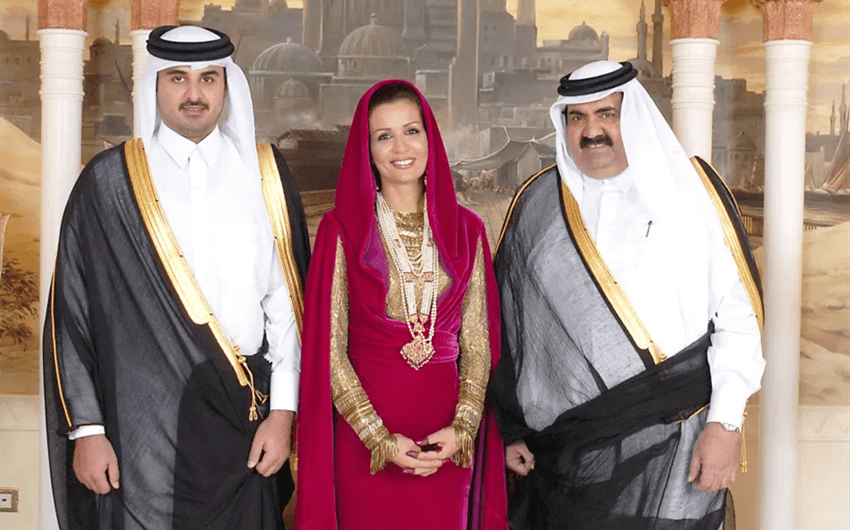
When people say “Qatar royal family,” they are typically referring to the Al Thani family, which has ruled Qatar for generations. But that phrase can mean different things depending on who’s using it:
- The ruling household (the Emir and immediate family)
- The extended Al Thani family (a large network of relatives with varying roles and access)
- Royal-linked elites (associates, appointees, and business figures connected to the ruling structure)
Why does this matter? Because “net worth” depends on whose assets you’re counting. A small inner circle may have enormous personal holdings. The broader family may have a wide range of wealth levels. When estimates throw out a gigantic number, they often blur these boundaries—treating the entire national system as if it’s one family checking account.
The core problem: “state wealth” vs. “family wealth” gets blended
Qatar is a high-income, energy-rich state with major national institutions. The most important one for understanding this question is Qatar’s sovereign wealth system—the set of investment entities that manage national surplus wealth globally. This is where outsiders often get confused.
There are three overlapping buckets of wealth that people mix together:
- State wealth: the country’s financial resources, institutions, and investment vehicles.
- Royal household wealth: assets controlled personally by members of the ruling household.
- Royal-linked wealth: private businesses, partnerships, and holdings that benefit from proximity to power.
Because Qatar’s leadership and the state are closely entwined, it can be difficult for outside observers to draw clean lines between these buckets. That’s why you’ll see wildly different net worth claims online—some are trying to estimate personal wealth, while others are effectively describing the financial power of the state apparatus that the ruling family leads.
Where Qatar’s wealth really comes from
If you want to understand how the royal family could be associated with enormous financial power, you need to understand Qatar’s national wealth engine. The country’s modern prosperity has been driven largely by:
- Natural gas exports (Qatar is one of the world’s major gas players)
- Energy-linked state revenue (taxes, royalties, and state participation in energy operations)
- Global investment diversification (deploying surplus into international assets)
In energy-rich states, the story often looks like this: commodity revenue creates large surpluses; surpluses get invested; investments create additional returns; returns fund public spending, development projects, and more investment. Over time, the state’s financial footprint can become massive—and because the ruling family sits at the top of governance, their influence over how wealth is stewarded becomes part of the “royal net worth” mythology.
The sovereign wealth effect: why Qatar’s global assets confuse the “net worth” question
Qatar’s sovereign investments are often the biggest reason people assume the royal family is worth an almost unimaginable amount. Sovereign wealth is not “family money” in the simple sense—it is national money invested for long-term national objectives. But the leadership’s role in directing strategy makes people talk about it like it’s privately owned.
Here’s what sovereign-style wealth typically includes:
- Equity stakes in major global companies
- Prime real estate in global cities
- Infrastructure and long-term funds
- Financial portfolios across regions and sectors
Because these holdings are global and high-profile, they create a perception of personal royal wealth—even when much of it is better described as state-managed wealth. This is the single biggest reason “Qatar royal family net worth” estimates balloon online: people treat sovereign assets as private assets.
So do members of the royal family have personal wealth?
Yes—at least in the general, common-sense way most people mean it. In monarchies and ruling-family systems, it is typical for senior figures to have personal holdings, private estates, and stakes in businesses. The problem is that the scope and structure of that wealth is rarely presented publicly as a full balance sheet.
Personal wealth may include:
- Private property (homes, estates, land holdings inside and outside Qatar)
- Private investment portfolios (stocks, funds, private equity)
- Business ownership (companies tied to construction, telecom, finance, hospitality, and other sectors)
- Luxury assets (high-value art, vehicles, aircraft, yachts—often the most visible but not always the biggest slice)
Because these assets aren’t all reported like a public company’s filings, outsiders rely on scattered signals: property purchases, leaked documents, investigative reporting, or high-profile acquisitions. Those signals are real, but they rarely add up to a complete picture.
Why online estimates are all over the place
If you’ve seen claims that range from “a few billion” to “hundreds of billions” or even more, you’re seeing estimation problems stacked on top of each other. The most common reasons include:
- No official disclosure: private holdings aren’t published in full.
- Counting the state as the family: sovereign wealth gets treated as personal wealth.
- Double-counting: the same asset gets counted under “Qatar,” “royal family,” and “sovereign fund” simultaneously.
- Confusing influence with ownership: controlling decisions isn’t the same as owning assets personally.
- Recycled internet numbers: one estimate gets copied across dozens of sites until it looks “confirmed.”
The result is a net worth conversation that feels confident but often isn’t grounded in a consistent definition of what’s being measured.
A more accurate way to frame the question
Instead of asking for a single net worth number, a better question is:
How much financial power is associated with the Qatari ruling system—and how much of that is personally owned by members of the Al Thani family?
That framing separates two realities:
- National financial power (state revenues + sovereign investments + national assets)
- Personal and family wealth (private holdings held by individuals and family entities)
When you separate these, the story becomes clearer. Qatar as a state is extraordinarily wealthy relative to its population. The ruling family, as the central political institution, is associated with that wealth. But association does not automatically equal personal ownership of every national asset.
What a “reasonable” conclusion looks like without pretending to know the exact number
With all that in mind, here’s the most responsible takeaway you can hold onto:
- There is no universally verified single number for the Qatar royal family’s net worth.
- Qatar’s state-linked wealth and investment footprint is enormous and global, which fuels very high estimates.
- Senior members of the ruling family likely hold substantial personal wealth, but it’s difficult to total precisely from public information.
- Most dramatic figures online often reflect a blend of private wealth and state financial power, not a clean personal balance sheet.
If your goal is accuracy, it’s better to accept the ambiguity than to adopt a headline number that might be measuring the wrong thing.
Why this topic stays popular
People keep searching “Qatar royal family net worth” because Qatar’s global visibility has grown sharply in modern times—through diplomacy, global investment, sports, media attention, and high-profile infrastructure development. When a country is small in population but massive in influence, people naturally ask: “How?” Money is one of the easiest explanations to reach for, and “royal family net worth” is the easiest search phrase to type.
But the deeper answer is that Qatar’s wealth is not a simple private fortune. It’s a national system of energy revenue, global investment strategy, and state-led development, with a ruling family at the top of governance. That structure makes the royal family extremely powerful financially—even if the personal net worth of individual family members remains hard to pin down with a single credible total.
Final thoughts
If you came here hoping for one tidy figure, you’re not wrong to want it—but this is one of those topics where a single number can be more misleading than helpful. The Qatar royal family (the Al Thani) is closely tied to one of the wealthiest state systems in the world, backed by energy revenue and vast international investments. That reality produces massive estimates, but those estimates often blur the line between personal family wealth and state financial power.
The most honest answer is this: Qatar’s ruling system commands extraordinary wealth and influence globally, and senior royals likely possess significant private fortunes—but the exact “royal family net worth” is not publicly disclosed in a way that supports a single definitive number.
image source: https://www.thesun.ie/news/9759670/qatar-royal-family-net-worth/