Matt Eberflus: Defensive Coaching Journey, Bears Tenure, Cowboys Detour, and What’s Next

Matt Eberflus is one of those NFL coaches whose name sparks strong opinions because his career has included both fast defensive turnarounds and highly visible head-coaching turbulence. If you’ve heard him described as a “culture builder,” a “hustle-and-takeaway guy,” or a coach who couldn’t get the whole operation to click, you’ve basically met the entire debate in one sentence. The real story is more layered—and it starts long before Chicago.
From Toledo linebacker to lifelong coach
Eberflus’ football identity was shaped early by structure. He played linebacker at the University of Toledo, a position that teaches you to see the whole field, communicate quickly, and clean up other people’s mistakes. That perspective often shows up later in coaches: linebackers tend to think in systems, not just in isolated matchups.
After playing, he moved into coaching almost immediately. His early years were spent in college football, where coaches don’t just teach schemes—they recruit, develop, and manage. That environment rewards organization and relentless routine, which became recurring themes in his professional reputation.
The college years: building credentials the hard way
Before he became a recognizable NFL name, Eberflus put in years on college staffs, including a significant run at Missouri. College coaching is often where a coach learns how to install a philosophy, not just call plays. You have fewer “plug-and-play” veterans and more raw players who need repetition, accountability, and a clear standard.
That’s why Eberflus’ later emphasis on effort, detail, and discipline wasn’t a branding invention. It was a survival skill learned in environments where you can’t out-talent everyone and you have to out-execute.
The NFL apprenticeship: Browns and Cowboys lessons
Eberflus entered the NFL as a position coach, including time with the Cleveland Browns and later the Dallas Cowboys. These years matter because they helped shape him into a modern pro coach: someone who could translate teaching into weekly game plans, manage veteran personalities, and adapt concepts to different rosters.
His Cowboys stint in particular is often remembered as a period where he learned how to coach within a big brand, high expectations, and constant attention. That kind of environment can be both a proving ground and a pressure cooker—useful training for what he would eventually face as a head coach.
The Colts leap: “takeaways” and a defensive identity
Eberflus’ biggest reputation boost came as defensive coordinator for the Indianapolis Colts. This is where his signature identity became recognizable: a defense built around speed to the ball, disciplined positioning, and a constant obsession with creating turnovers.
At a practical level, his defenses were often described with a few repeating ideas:
- Hustle as a baseline: effort wasn’t optional; it was the first evaluation point.
- Discipline and simplicity: fewer blown assignments, more playing fast.
- Takeaways as a “stat that changes lives”: turnovers were treated like the quickest way to flip outcomes.
- Team defense over hero defense: coordinated pursuit, rallying, and tackling.
In Indianapolis, that approach helped him develop a national profile. He became known as a coach who could install a standard, stabilize a unit, and get players buying into a shared language. That reputation is what pushed him into head-coaching conversations.
Chicago hired him to build a program, not just a defense
When the Chicago Bears hired Eberflus as head coach, the hope was bigger than “fix the defense.” The Bears were looking for a leader who could build a consistent culture—one that survived roster changes, staff changes, and the yearly chaos that can swallow struggling franchises.
His public messaging leaned into that mission. He talked about principles, accountability, and creating a daily standard. And for a while, it made sense on paper: a defensive-minded head coach with a clear system, partnered with a front office that wanted a reset.
But head coaching in the NFL isn’t a single job. It’s a bundle of jobs: game management, staff selection, quarterback development (even if you’re defensive), roster communication, public leadership, and the ability to win close games when everything is messy.
The Bears years: why it never fully stabilized
Eberflus’ Bears tenure became defined by a hard truth: culture talk only works if the product on Sundays improves. Chicago struggled to stack wins, and the losses became heavier because they often felt repetitive—like the team couldn’t escape the same cycle.
Several factors shaped how the public experienced his time in Chicago:
- Results came slowly: losing seasons create noise, doubt, and internal pressure.
- Offensive instability: the NFL revolves around quarterbacks and offensive identity, and constant change can stall growth.
- Game-management scrutiny: close losses magnify every decision—timeouts, fourth downs, late-game sequencing.
- Staff turbulence: coordinator changes and role shifts can disrupt continuity.
Even when the defense showed moments of life, the overall operation struggled to feel like a team moving in one direction. And once a franchise believes the trajectory isn’t good—especially when a young quarterback’s development is on the line—head coaches rarely get unlimited time.
How and why his Chicago run ended
Chicago ultimately moved on from Eberflus during the 2024 season. That timing matters because in-season firings are a signal that leadership believes staying the course is actively damaging the future. It’s not just about what happened; it’s about what they fear will happen next if nothing changes.
For Eberflus, this was the sharpest reputational hit of his career—because head coaching is the job most fans remember. Coordinators can reinvent themselves quickly. Head coaches are judged as the face of an entire era.
The Cowboys detour: one season as defensive coordinator
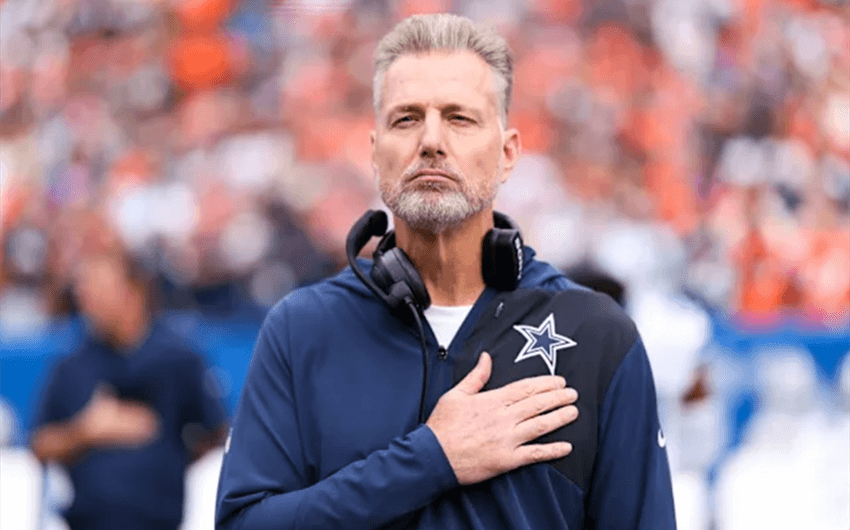
After Chicago, Eberflus returned to a role where his strengths were more concentrated: defensive coordinator. He took over the Dallas defense for the 2025 season, stepping back into the narrower focus of building a unit rather than running an entire franchise.
But the Dallas chapter didn’t last long. He was fired after one season. That doesn’t automatically mean his scheme “doesn’t work.” Coordinator tenures can be affected by injuries, roster turnover, stylistic mismatch, internal politics, or a team’s desire to reset after a disappointing year.
Still, the short stint reinforces how unforgiving the NFL is: even experienced coaches rarely get patience when results don’t match expectations.
What Eberflus actually stands for as a coach
If you strip away the headlines and focus on coaching DNA, Eberflus is strongly associated with a few core principles:
- Effort as identity: players are expected to run, hit, and finish consistently.
- Defensive fundamentals: alignment, pursuit angles, tackling, and assignment integrity.
- Turnovers as the quickest “equalizer”: he treats takeaways like a weekly mission, not a bonus.
- Repeatable culture language: slogans and standards meant to stay stable across seasons.
Some people love that style because it feels professional and grounded. Others criticize it because today’s NFL can punish teams that are too rigid, too conservative, or too slow to evolve—especially when the offense is the main driver of wins.
The main criticism: being a head coach is not being a defensive coordinator
The most common critique of Eberflus isn’t that he “doesn’t know defense.” It’s that his head-coaching run raised doubts about whether his strengths translate into the full CEO role—especially in an era where offensive innovation and quarterback development are the currency of job security.
Head coaches are judged on:
- how the quarterback develops
- how the staff fits together
- how the team performs in late-game situations
- how quickly the organization improves year over year
Even a strong defensive identity can get drowned out if those bigger pieces aren’t working.
What’s next for Eberflus?
Coaches with Eberflus’ background usually have two realistic paths:
- Return as a defensive coordinator: the fastest way to rebuild reputation is to field a top-10 unit and stack defensive success.
- Re-enter head-coaching conversations later: this is harder, but not impossible, if he wins big as a coordinator and shows growth in leadership and adaptability.
The NFL is full of second acts. It’s also full of coaches who discover they’re at their best when their world is smaller and sharper—focused on one side of the ball, one unit, one weekly problem to solve.
Why people keep searching him now
Eberflus remains a popular search because his career sits at the intersection of two NFL truths: defense still matters, and the league still revolves around offense. Fans want to know whether he’s a misunderstood coach who landed in the wrong situation—or a coach whose ceiling is coordinator rather than head coach.
The answer may ultimately be practical, not emotional: wherever he goes next, the results will tell the story fast. If a defense improves immediately under him, he’ll be viewed as a specialist worth hiring. If the results are mixed again, the narrative hardens.
Bottom line
Matt Eberflus is a coach with a clear defensive identity, a proven ability to build structure, and a career that has swung between respected coordinator success and highly public head-coaching struggle. His next chapter will likely be about narrowing the focus, rebuilding momentum, and showing that the lessons of Chicago and Dallas didn’t just happen to him—they changed him.
image source: https://sports.yahoo.com/articles/cowboys-fire-coordinator-matt-eberflus-142915305.html