
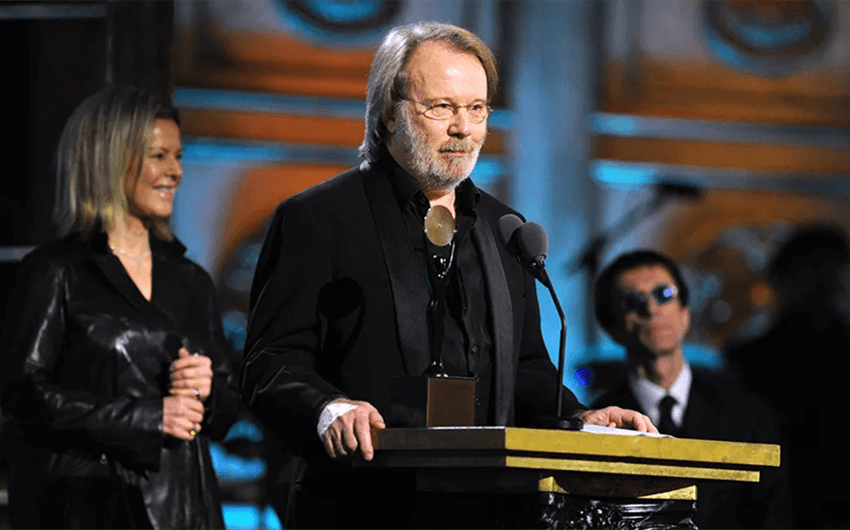
Benny Andersson Net Worth: How ABBA Royalties Built One of Pop’s Biggest Fortunes

Benny Andersson’s net worth is one of those topics that keeps resurfacing because it sits at the intersection of two things people love: legendary music and staggering long-term money. Benny isn’t just an “ABBA member.” He’s one of the principal writers and producers behind a catalog that has stayed commercially alive for decades—through radio, streaming, movies, stage musicals, compilations, reissues, and the modern ABBA comeback era. That kind of evergreen success creates a different kind of wealth than a one-time hit: it creates a financial engine that keeps running even when the artist isn’t touring every year.
So how much is he actually worth? Most widely repeated estimates place Benny Andersson’s net worth around $230 million, though you’ll also see higher numbers floating around depending on how a site values royalties, intellectual property, and long-term earnings. The big takeaway is not the exact dollar figure—it’s the reason he’s so consistently listed among the wealthiest musicians of his era: his money is tied to ownership and songwriting, not just performance.
What Benny Andersson’s net worth is “estimated” to be
Most public net worth estimates cluster around $230 million. You’ll sometimes see figures that push closer to $300 million, but those usually rely on more aggressive assumptions about how much value to assign to music rights, investments, and private holdings.
The important thing to understand is that “net worth” is not a paycheck total. It’s a snapshot: assets minus liabilities. And with a global songwriter-producer, many of the most valuable assets are intangible—rights, royalties, publishing, and long-term catalog performance—so different estimators end up with different numbers.
Why Benny Andersson’s wealth is so durable
Some artists make money in bursts. Benny Andersson’s wealth is built on durability. His income is tied to work that keeps generating revenue in multiple formats:
- Songwriting royalties from compositions that are still played worldwide
- Publishing income connected to ownership and licensing
- Production credits and recorded master revenues
- Musical theater earnings from long-running productions
- Film and TV usage through sync licensing
- Modern ABBA-era revenue from major comeback projects
That mix matters. A performer can sell out arenas and still end up with a relatively modest net worth if the spending is high or the ownership is low. A songwriter-producer with timeless catalog ownership can build wealth that keeps compounding, quietly, year after year.
ABBA royalties: the core engine behind the fortune
ABBA’s catalog is not just famous—it’s commercially active in a way most “classic” acts never achieve. Songs like “Dancing Queen,” “Mamma Mia,” “The Winner Takes It All,” “Take a Chance on Me,” and “Gimme! Gimme! Gimme!” aren’t nostalgia tracks sitting on a shelf. They’re constant earners.
Benny’s role in ABBA was foundational. He co-wrote and co-produced much of the band’s material alongside Björn Ulvaeus. That’s why his wealth story is inseparable from songwriting: if you help write the songs, you’re not only paid when the album sells—you’re paid when the songs live on.
In practical terms, ABBA royalties come from:
- Streaming and digital plays
- Radio airplay
- Physical sales and reissues
- Licensing for movies, TV, ads, and games
- Covers and sampled uses
- Compilation albums and boxed sets
The catalog’s value is strengthened by something money can’t easily buy: cultural permanence. When a song becomes part of weddings, sports arenas, karaoke nights, and multiple generations of playlists, it doesn’t “age out.” It keeps earning.
Mamma Mia: the ABBA project that printed money for a new era
If ABBA’s original run built the foundation, Mamma Mia! helped turn that foundation into an intergenerational empire. The stage musical (built around ABBA’s songs) became a global phenomenon, and the film adaptations expanded the audience even further. When ABBA songs become the backbone of a long-running musical, the revenue isn’t just “music industry” revenue anymore—it becomes theater revenue, international touring revenue, and film-franchise revenue.
For net worth, this matters because it diversifies income. It also lengthens the timeline. A hit album is huge, but it has a peak. A hit musical can run for years—and then return in revivals, tours, and new markets. Benny’s financial story benefited enormously from that second wave of ABBA popularity.
Chess and Kristina: big theater credibility, long-tail earnings
Benny Andersson didn’t stop after ABBA. One of the reasons his net worth stays high in the public imagination is that he kept creating major projects outside the band. Two of the most frequently mentioned are:
- Chess (co-created with Björn Ulvaeus and lyricist Tim Rice)
- Kristina från Duvemåla (a major Swedish musical co-created with Björn)
Even if you aren’t a theater person, these projects matter because they show something financially powerful: Benny’s career didn’t depend on ABBA “never ending.” He built additional intellectual property—work that can be performed, licensed, revived, and recorded across generations.
Musical theater income isn’t always loud, but it can be steady. Licensing fees, cast recordings, production rights, and international stagings can keep paying long after the premiere hype fades.
Benny Anderssons Orkester and the Swedish audience base
Another thing that keeps Benny’s wealth story stable is that he has never been only a “global celebrity.” He has remained a major cultural figure in Sweden with his own musical identity beyond ABBA. His work with Benny Anderssons Orkester (BAO) reinforced that he can release music, tour, and remain relevant without relying solely on ABBA nostalgia.
From a money standpoint, that kind of national popularity creates consistent opportunities: performances, collaborations, releases, and long-term cultural positioning that can support income even when global headlines quiet down.
ABBA Voyage and the modern comeback economy
ABBA’s modern era has introduced a new category of earning: the “comeback economy,” where legacy acts earn enormous sums through premium experiences rather than constant traditional touring. The ABBA Voyage project is the most visible example of this shift—an innovative concert concept that created a huge global talking point and renewed commercial momentum for the group’s music.
Projects like this can impact net worth in two ways:
- Direct revenue from production involvement, brand licensing, and associated deals
- Catalog boost that drives more streaming and renewed interest in the entire discography
For artists whose primary asset is a catalog, anything that reignites the catalog is essentially a multiplier.
How “net worth” sites can get the number wrong
Even though Benny Andersson’s net worth is commonly quoted, you should treat any exact figure as a best-guess estimate. Here’s why the number can swing so much:
- Publishing and royalty ownership is complex. The public rarely knows exact splits or ownership percentages.
- Private investments aren’t public. Real estate, private companies, and holdings aren’t neatly disclosed.
- Different sites value IP differently. Some treat royalties like a simple income stream; others treat them like an asset that could be sold for a massive lump sum.
- Taxes and expenses aren’t visible. A fortune can look bigger or smaller depending on how a site guesses obligations.
So when you see $230 million, understand what it really means: the world agrees he’s extremely wealthy, and that number is a commonly repeated approximation—not a number pulled from his personal financial documents.
What actually makes Benny Andersson rich: ownership, not headlines
If you strip away the glamour of the ABBA story, Benny’s wealth comes down to a simple principle: own the work that people keep consuming.
Many artists are paid once. Benny is paid repeatedly because the work keeps returning in new forms:
- A song becomes a movie soundtrack moment
- The movie makes people stream the original recording
- The streaming boosts catalog visibility
- The renewed popularity brings licensing requests
- The musical revives in a new country
- A new generation discovers the songs
This loop is what turns a famous musician into a long-term wealthy creator. It’s not just fame—it’s repeated monetization of timeless work.
So what’s the simplest answer?
Benny Andersson’s net worth is most commonly estimated at around $230 million, with some estimates placing it higher depending on how his royalties and assets are valued. The reason the figure stays so large and so consistent in public discussion is that his income comes from deep, long-lasting ownership: ABBA songwriting and production royalties, massive stage and film success through Mamma Mia!, and a post-ABBA career that continued to generate valuable intellectual property.
In other words: Benny Andersson isn’t just wealthy because ABBA was huge. He’s wealthy because ABBA never stopped earning—and he helped build the kind of music that refuses to go away.
image source: https://variety.com/2013/film/news/abba-co-founder-benny-andersson-takes-the-circle-into-full-speed-1200929093/