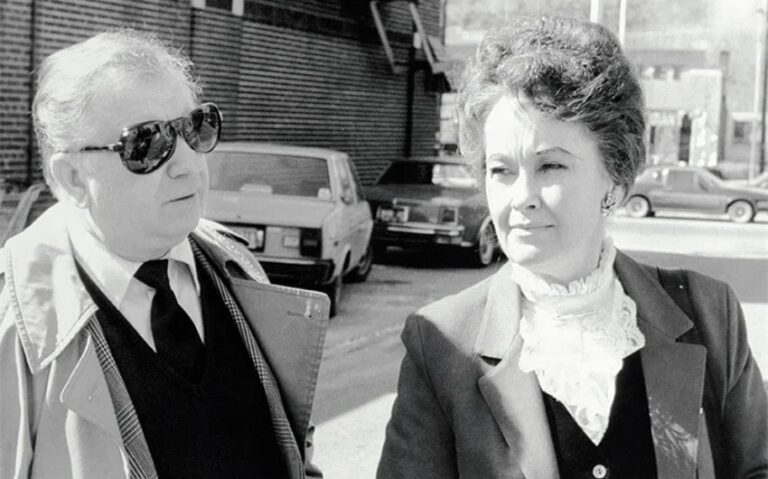
Bob Kroll Wife: Who Liz Collin Is and Why Their Marriage Drew Scrutiny
When people search for bob kroll wife, they’re usually trying to figure out two things at once: who she is, and why their relationship became part of a bigger public conversation. Bob Kroll is best known for his former role as a Minneapolis police union leader, while his wife, Liz Collin, is a well-known journalist in Minnesota media. Their marriage drew attention not because it was flashy, but because it raised questions about power, public trust, and how close media coverage can get to the institutions it reports on.
So who is Liz Collin?
Liz Collin is a Minnesota journalist and TV personality who became widely recognized through her reporting and anchoring work. For many years, she was associated with local broadcast news, where she covered major community issues, crime, politics, and public safety topics—exactly the kind of beat that regularly intersects with police departments, city leadership, and controversial incidents.
In other words, she isn’t known because she married Bob Kroll. She’s known because she has an established media career, a recognizable on-air presence, and a reporting history that placed her close to some of the most sensitive civic issues in Minneapolis.
Who is Bob Kroll, and why does his name bring so much baggage?
To understand why people fixate on Liz Collin as “Bob Kroll’s wife,” it helps to understand what Bob Kroll represented in the public conversation. Kroll was a Minneapolis police officer and later a prominent union leader, a role that put him at the center of debates about policing, accountability, discipline, and reform—especially in the years surrounding major protests and community pressure on law enforcement leadership.
Union leadership in policing is not a quiet job. It involves speaking publicly, defending officers, negotiating contracts, pushing back against reform proposals, and shaping public messaging—sometimes in a way that communities experience as combative. That’s why Kroll’s name became a flashpoint. People didn’t just see a person; they saw a symbol of an institution and a set of policies.
How their marriage became a “conflict of interest” storyline
In many communities, it would be mildly interesting if a TV anchor married a police officer. In Minneapolis, during a period of intense scrutiny on policing, it became much more charged—especially because Bob Kroll was not just any officer. He was a powerful union figure with a public voice.
The core concern people raised was simple: if a journalist covers law enforcement or public safety, and their spouse is one of the most visible defenders of that department, can the coverage still be trusted as independent?
It’s not a question that only applies to this couple. Journalism ethics has always wrestled with the idea of proximity: can you objectively cover a subject if you’re personally tied to it? In an ideal world, a newsroom manages that through disclosures, careful assignments, and clear boundaries. In a heated world, the public often assumes the worst.
What people assumed vs. what can actually be proven
This is where online discussions often get sloppy. A lot of people jump from “potential conflict” to “proven bias,” as if a marriage automatically rewrites a person’s professional integrity. But a marriage is not a signed contract to share opinions. Two people can love each other and still have separate professional identities, values, and practices.
At the same time, public trust is fragile. If the audience believes a newsroom is too close to police leadership, it doesn’t matter how carefully producers assign stories—many viewers will still feel uneasy. That tension is exactly why Liz Collin and Bob Kroll drew public attention. It wasn’t just gossip. It was the public struggling with the idea of neutrality during a moment when neutrality felt impossible.
Why this story stuck with people
Most “who is someone’s wife?” searches burn out quickly because the answer is simple and the stakes are low. This one lingered because it sat at the intersection of three sensitive things:
- Law enforcement power (a union president isn’t a background figure)
- Media influence (journalists shape what people believe is real)
- Community trauma and politics (policing debates can feel personal, not abstract)
When those three collide, even ordinary personal facts—like who someone is married to—start to feel loaded.
What Liz Collin is known for beyond her marriage
Liz Collin’s work has included high-profile reporting and commentary on Minnesota issues, and she has maintained a public-facing role even when criticism has followed. Over time, she has also built a reputation for leaning into investigative or advocacy-style storytelling, depending on the platform and the project.
People tend to have strong reactions to journalists who become part of the story. Some viewers interpret that as courage: someone willing to stand in their perspective even when it’s unpopular. Others interpret it as proof that journalism has drifted into activism. That debate isn’t unique to her, but her name gets pulled into it because of the intensity of Minneapolis’s recent history and the fact that her marriage to Kroll made her personal life relevant to the way audiences judged her work.
The internet confusion: “wife,” “ex-wife,” and outdated bios
Another reason this topic stays searchable is that the internet struggles with timelines. Some pages don’t update. Some copy older bios. Some treat “wife” as a permanent label even when a person’s career changes or their spouse leaves public office.
As far as mainstream public reporting consistently reflects, Liz Collin is Bob Kroll’s wife. But you’ll still see outdated or mismatched descriptions floating around because many websites publish quick biography summaries designed to rank in search results rather than provide carefully maintained facts.
If you’re trying to make sense of what you see online, one helpful approach is to focus on stable, widely reported points (who she is and what she does) and ignore pages that jump into dramatic claims without showing where the information comes from.
Why the “conflict” question hits harder in local news
National media can feel distant. Local news doesn’t. It’s where people turn when their neighborhood changes, when a protest blocks streets, when a shooting happens nearby, or when city leaders make decisions that affect daily life.
Because local news is close to the ground, the public tends to expect a different kind of accountability. If you suspect a national anchor has a bias, it can feel like an opinion issue. If you suspect your local anchor has a personal tie to the most controversial police figure in town, it can feel like your reality is being managed rather than reported.
That’s the emotional reason this topic mattered. It wasn’t about celebrity curiosity. It was about trust.
What this reveals about modern “public figure marriages”
In the past, a marriage between two working professionals might have been a private fact people only knew through a small announcement or a whispered detail. Now, relationships function like a searchable data point. The public doesn’t just want to know who someone is married to; they want to interpret the marriage as evidence.
But relationships aren’t court documents. They don’t automatically prove anything about ethics, intent, or worldview. They can influence perception, absolutely. They can create questions that deserve answers, yes. But they still don’t substitute for proof.
In this case, Liz Collin became part of a public narrative because her spouse held an influential role in one of the most disputed public institutions in the city. The question people were really asking wasn’t “Who is she?” It was “Can the public still trust what it’s watching?”
What to take away if you just want the simple answer
If you came here for the straightforward response, it’s this: Bob Kroll’s wife is Liz Collin, a Minnesota journalist and media figure. If you wondered why this marriage comes up so often, it’s because their careers sit on opposite sides of a relationship that the public tends to view as high-stakes: police power and media power.
That combination doesn’t automatically mean wrongdoing. But it does explain why people keep searching—and why the question often carries more tension than it seems at first glance.
Final thoughts
It’s easy to dismiss “bob kroll wife” as gossip, but the reason it trends has more to do with civic anxiety than celebrity curiosity. Liz Collin is a public-facing journalist. Bob Kroll was a public-facing police union leader. Their marriage became a symbol for some people—a symbol of everything they feared about institutions protecting each other. For others, it became a symbol of unfair public suspicion and the danger of treating personal relationships as automatic proof of professional bias.
Either way, the basic fact remains: Liz Collin is known in her own right, and her marriage to Bob Kroll is the reason her name is pulled so often into larger conversations about policing, media, and public trust.
image source: https://www.nytimes.com/2020/06/06/us/police-unions-minneapolis-kroll.html