
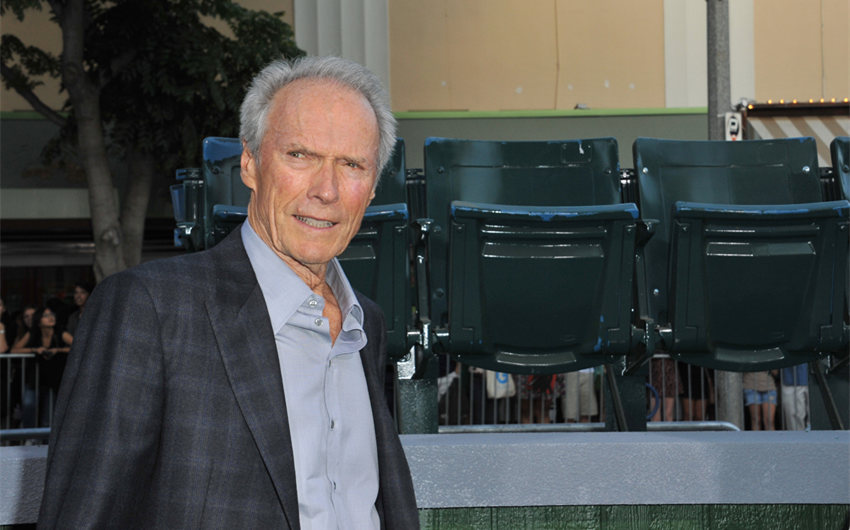
Clint Eastwood Net Worth: 2026 Estimate and How His Wealth Was Built

Clint Eastwood’s net worth looks enormous for a simple reason: he didn’t spend his career as “just an actor.” He built leverage—directing, producing, and running a company that let him keep more of the profits while other stars depended on studios. Add decades of steady hits, long-tail earnings from a legendary catalog, and real estate projects that grew into valuable assets, and you get a fortune that’s repeatedly placed in the high hundreds of millions.
Who Is Clint Eastwood?
Clint Eastwood is an American actor, director, producer, and cultural icon whose career spans more than seven decades. He became a star through Westerns and tough-guy roles that defined an era, then evolved into a respected filmmaker with award-winning work behind the camera. He’s known for classics that shaped popular cinema, and he later built another major chapter as a director who could deliver prestige films and commercial winners.
He’s also been a public figure outside entertainment, including serving as mayor of Carmel-by-the-Sea, California. But financially, what matters most is how he positioned himself: Eastwood didn’t just work in Hollywood—he built a structure that allowed him to own pieces of his output and keep earning long after the premiere lights went out.
Estimated Net Worth in 2026
Clint Eastwood’s net worth in 2026 is most commonly estimated at around $375 million. You’ll sometimes see estimates a bit lower or higher, typically in a range of roughly $300 million to $400 million, depending on how a source values real estate, private business interests, and the long-term profit participation he’s known for.
The key point is that his fortune is not based on one gigantic payday. It’s the product of decades of strong earnings, ownership-minded dealmaking, and asset growth. For someone with his longevity, net worth reflects a whole ecosystem: film income, company profits, property value, and the compounding effect of an evergreen catalog.
Net Worth Breakdown: Where Clint Eastwood’s Money Comes From
1) Acting Salaries From a Multi-Decade Run
Eastwood’s early wealth foundation came from a long stretch as a reliable box-office draw. When a star remains bankable for decades, the checks stack. Even before his biggest directing era, he had a career long enough to generate consistent high income across multiple cycles of Hollywood economics.
Acting money alone can create wealth. But in Eastwood’s case, acting was the platform that gave him negotiating power. That power is what allowed him to move into the deals and ownership structures that typically generate far more wealth than a flat salary.
2) Directing Fees and “Filmmaker” Economics
Directors at Eastwood’s level don’t just get paid to show up. They’re paid for being the engine of a project: shaping the story, controlling production, delivering the final product, and protecting the budget. When a director is also a proven brand, that role becomes a premium position.
Over the years, Eastwood directed films that weren’t merely “well-reviewed.” Many were financially successful, and several became long-term catalog titles that remain valuable in the streaming and licensing era. Directing income tends to build wealth more efficiently than acting income because it often comes with stronger leverage and, in some cases, a larger share of backend participation.
3) Producing and Malpaso Productions
One of the biggest drivers of Eastwood’s net worth is his long-standing production company, Malpaso Productions. A production company isn’t just a vanity label. At scale, it’s a business that can capture value through development control, production fees, and profit participation. It can also create continuity: a stable operating base that supports repeated projects, reduces reliance on outside gatekeepers, and increases the odds of owning valuable rights or participation points.
This is where Eastwood’s wealth story becomes more “entrepreneurial” than most actors from his era. A star who only acts is paid per job. A star who produces can build an asset that earns beyond each individual job.
4) Backend Participation and Profit Shares
When you hear about legendary Hollywood fortunes, backend participation is usually part of the explanation. Backend deals—where compensation is tied to performance—can create outsized earnings when films succeed. A single strong participation structure can outperform multiple flat-fee salaries, especially when a film has long-term sales and licensing value.
Eastwood’s career includes many projects with long shelf life. That matters because participation can continue to generate income as titles are licensed, replayed, bundled, and redistributed across new platforms.
5) Long-Tail Value From an Evergreen Catalog
Catalog value is the quiet engine behind many older Hollywood fortunes. Eastwood’s films aren’t only “old movies.” They’re persistent titles that stay culturally relevant and remain watchable across generations. That ongoing demand makes the library valuable to networks, streamers, and distributors who want recognizable content with built-in audience trust.
Even when individual royalty structures vary by contract, the overall effect for someone with Eastwood’s filmography is clear: a deep catalog can keep producing income long after the active production years slow down.
6) Real Estate Holdings and Asset Growth
Real estate is frequently a major component of ultra-high net worth, and Eastwood has long been connected to valuable property in California. Over time, premium real estate can become a wealth stabilizer—an asset class that stores value and often appreciates significantly across decades.
One of the most notable real estate-related pieces of his legacy is Teháma, the large, private community development associated with his vision in the Carmel area. A project of that scale isn’t just “property.” It’s a long-term asset ecosystem: land value, development value, and brand value tied to exclusivity and location.
Even individual property transactions can matter. When a home is held for years and sold in a strong market, it can lock in significant gains. For a person with multiple holdings over a long timeline, those gains can meaningfully support a nine-figure net worth.
7) Public Image, Brand Power, and Ongoing Opportunities
Eastwood’s name itself has value. For icons, brand power can create opportunities that are less obvious than box-office numbers: premium directing offers, favorable financing, strong distribution terms, and the ability to greenlight projects that others might struggle to get made.
Brand value also protects wealth. When you remain culturally significant, your catalog stays in demand, your projects retain prestige, and your negotiating power stays stronger than someone who fades into nostalgia without current relevance.
8) Costs, Taxes, and Why the Net Worth Isn’t Higher
People sometimes assume that a legend’s net worth should be “bigger” simply because their career was massive. But net worth is what remains after reality: taxes across decades, business overhead, legal and administrative costs, property upkeep, and personal spending. Film production itself is expensive, and a production company has ongoing operating costs even between projects.
That’s why a $375 million estimate can still represent an extraordinary financial outcome. It reflects huge lifetime earnings and asset value while acknowledging that this is the real world, not a headline fantasy where every dollar earned becomes a dollar saved.